
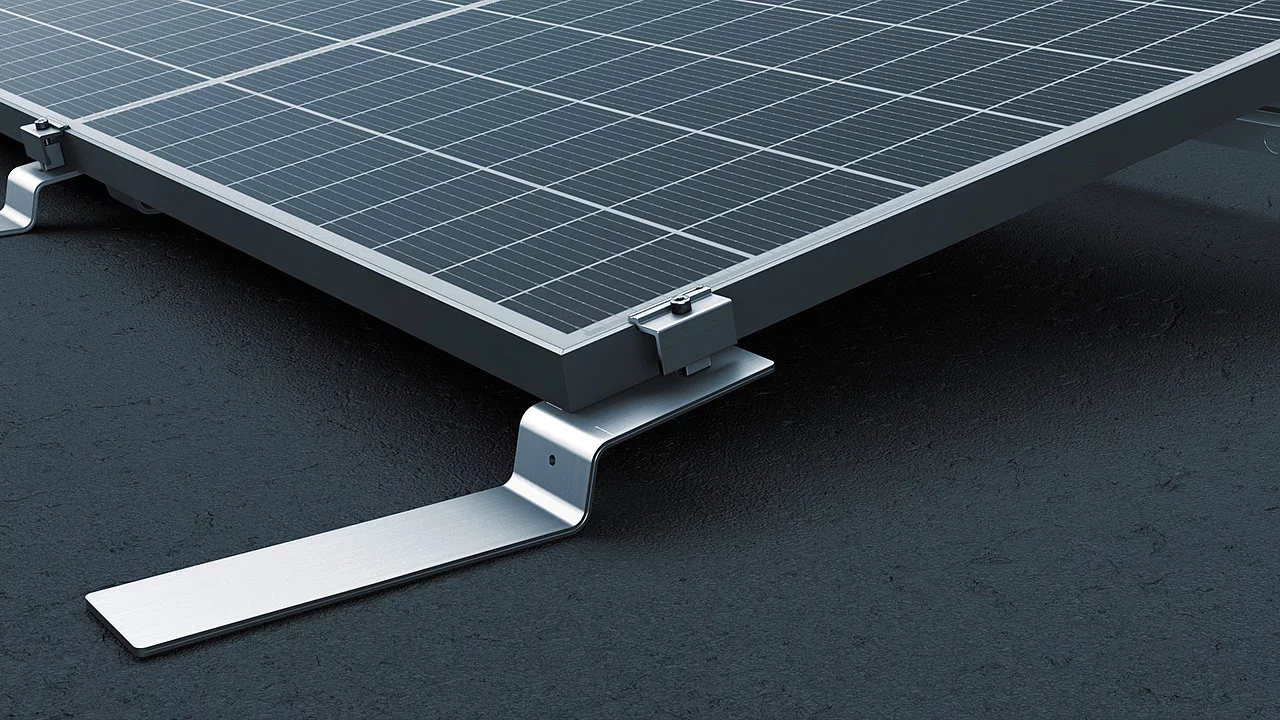
A rooftop array is a twenty-five-year commitment bolted to a membrane that may not last ten
That sentence is the whole reason we exist on a solar project. A photovoltaic system is sold on a multi-decade payback. The single-ply membrane it lands on is often well into its own service life by the time anyone proposes panels. We are roofers, not panel dealers, and the value we add to a Dayton solar job is making sure the surface under the racking is sound, the holes through it are detailed correctly, and the roof warranty you already paid for is still alive when the inverters switch on. Get the order of operations wrong and the cheapest part of the project — the roof — becomes the most expensive thing on the building.
The buildings driving this work around the Miami Valley each ask a different question of the roof. The distribution and flex-industrial roofs along the I-75 spine through Moraine and Vandalia offer the wide, unbroken low-slope field that ballasted arrays are designed for. Office and medical buildings clustered around Austin Landing in Miamisburg are chasing predictable energy costs and corporate sustainability targets. Research and aerospace tenants in the gravitational pull of Wright-Patterson Air Force Base want generation that keeps running when the grid does not. None of those goals survive a roof that fails underneath the array, so we start every conversation at the deck and work up.
Step one is always a core cut, not a panel count
Before we sign off on putting weight and penetrations into any roof, we open it. Core samples pulled from the field tell us how many plies are down, what shape the insulation is in, and — critically — whether water is already trapped in the assembly where nobody can see it. That data produces a remaining-service-life number, and that number drives the single biggest decision on the project.
- Fifteen or more honest years left in the membrane: mounting solar on the existing roof is a defensible call.
- Roughly seven years or fewer: the economics flip hard, because removing a committed array to tear off the roof beneath it and reinstalling later costs far more than reroofing now onto a fresh surface.
- Seams and perimeter flashings already leaking: adding several hundred mounting feet will not improve a roof that is failing at its edges — those get resolved first.
- Standing water in the field: ponding under a ballasted array is brutal to chase down once panels are in the way, so drainage gets corrected before, not after.
We hand owners the documented life estimate so the reroof-now-or-mount-now question gets answered on evidence instead of optimism. Installing twice is the most common avoidable expense we see on rooftop solar.
Weight, uplift, and which racking the roof can actually accept
Two attachment methods dominate commercial roofs here, and each one stresses the building differently. Ballasted racking pins the array down with concrete blocks and touches the membrane only through protection pads — no penetrations, very warranty-friendly. The trade is dead load: several pounds per square foot spread across the field, with heavier point loads at the ballast trays, all of which has to clear the building's structural capacity. Mid-century commercial structures across the region were frequently engineered to lighter load standards than current code assumes, so a structural engineer's confirmation is not a formality we skip.
Attached racking swaps ballast weight for mechanical anchors driven into the deck or structure. It cuts dead load and resists uplift better in exposed conditions, but it punches a penetration at every mounting foot. Wind is why the method matters: an array is a large, low surface sitting in a parking-lot-flat wind field, and the ballast quantity or anchor pattern has to be engineered to the site's design wind speed. We will not let a generic, copy-pasted racking layout get fastened over a roof we warrant until the uplift calculations are shown to match this building on this site.
Every mounting foot and every conduit run is a leak we prevent at install
On attached systems each foot is a deliberate hole in your roof. We flash those penetrations to the membrane manufacturer's published detail — correct base flashing, the specified sealant and termination, a target the warranty inspector will actually accept — rather than letting a solar crew shoot a foot through the membrane and run a bead of caulk over it. The conduit feeding the array back to the building's electrical service is the other quiet failure point. Conduit strapped flat against the membrane abrades it over thermal cycles, and off-the-shelf pipe boots on conduit penetrations split and weep within a few seasons. We set the standoffs and detail the through-roof conduit, and we want that routing agreed in writing before the electrician pulls a single conductor.
Two trades, two warranties, one watertight sequence
The most expensive solar-roof failures we get called to repair almost always trace back to a roofing contractor and a solar installer who never spoke to each other. Sequencing is the cure. The membrane goes down and gets inspected. The roofer flashes the conduit and the mounting penetrations. Only then does the solar crew set racking and panels onto a roof that is already watertight and documented. We chair a pre-construction coordination meeting with the solar EPC to lock the penetration details, the conduit path, the ballast-pad and walkway protection, and the final inspection that both warranties depend on.
Most major single-ply manufacturers will keep a roof warranty intact beneath an array, but only if the design clears their review before installation — approved protection pads, approved penetration details, and a sign-off from their field representative. We carry that review so the solar scope does not quietly void the roof coverage you are counting on. A flawlessly engineered array sitting on a roof whose warranty was nullified during install is still a problem, and it is one we would rather you simply never have.
What Dayton owners ask us about going solar
Reroof first, or mount on what we have?
The core cuts decide it. Fifteen-plus years of membrane life and the existing roof is fair game. Seven or fewer and reroofing first almost always beats mounting now, stripping the array later for a tearoff, and reinstalling it. We pull the cores and give you the number.
Does solar mean holes in my roof?
Not always. Ballasted racking on a flat roof holds the array with weight and never penetrates the membrane. Attached racking does, and where it does we flash every foot to the manufacturer's detail and register it under the warranty.
Which membrane belongs under panels?
Reflective white TPO or PVC at 60-mil or heavier is the usual spec here. The white surface runs cooler under the array, which helps panel output, and gives racking a durable, uniform substrate. Where structural load is tight we lean toward a fully adhered system to keep ballast off the deck.
Will you actually coordinate with my solar contractor?
That coordination is the entire point of hiring us for this. We run the pre-construction meeting with your solar EPC, set the build sequence, agree the conduit routing and penetration details, and schedule the inspections each warranty requires so the roof and the array get signed off together instead of argued over after a leak.
What to send before the roof walk
Send the roof address, leak photos, roof age if known, access instructions, tenant limits, prior reports, and the deadline driving the decision. That lets the first visit focus on the roof condition instead of chasing basic context.
Questions Owners Ask
Can this work happen while the building is occupied?
Often yes. The scope should cover access, safety, dry-in, staging, noise, interior protection, and the times when tenants or operations cannot be interrupted.
What changes the cost most?
Wet insulation, deck condition, edge metal, layer count, access, roof size, code triggers, weather timing, and the amount of repeated damage usually move the cost.
How is the condition documented?
The roof file should include photos, locations, material notes, observed defects, temporary repairs, remaining deficiencies, and recommended next steps.