
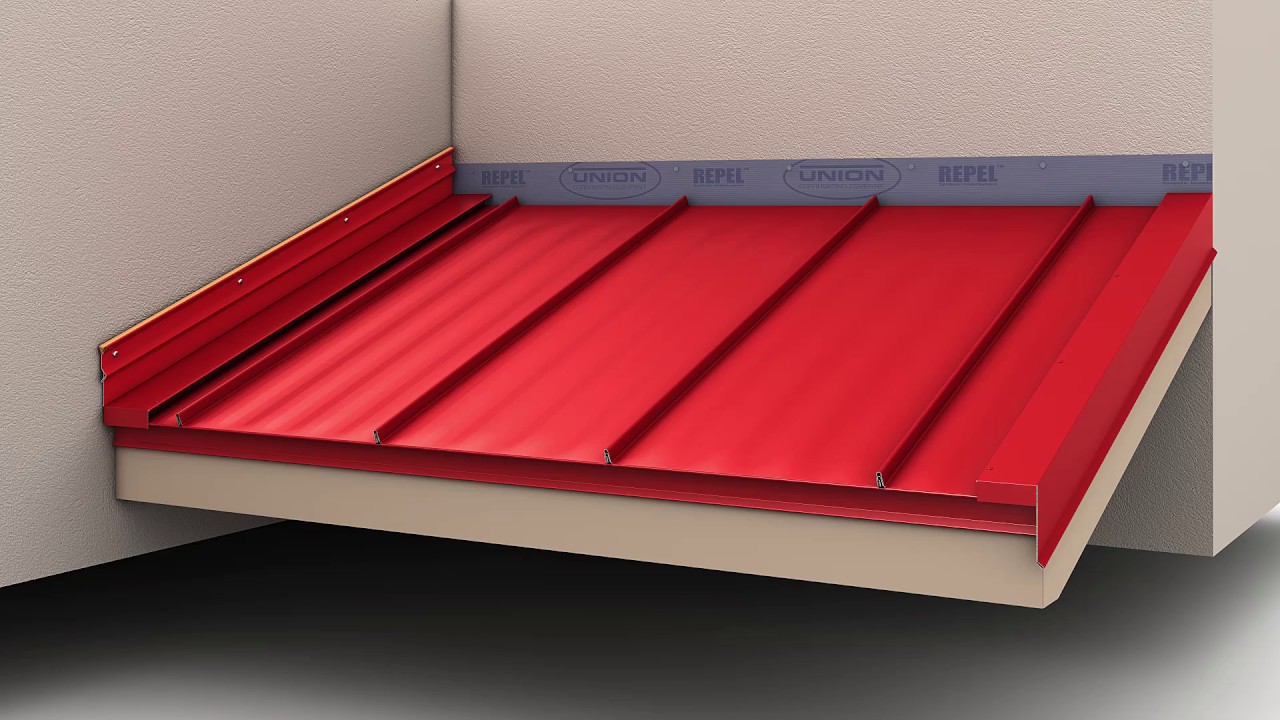
Skylight and Penetration Flashing for commercial buildings across Dayton, Montgomery County, Kettering, Beavercreek, Fairborn, Huber Heights, Vandalia, Miamisburg, Centerville, Springboro, Troy, Xenia, and the Miami Valley.
Flashing failure at penetrations and skylights is the most reliably recurring source of active leaks across Dayton's commercial roofing inventory. The physics are simple: every point where something passes through or interrupts the continuous roofing membrane is a potential water entry point, and Dayton's freeze-thaw cycling is a relentless mechanical force that attacks the joint between the roofing membrane and the penetration flashing. The Miami Valley's annual temperature swing — from -10°F winter lows to 100°F summer surface temperatures — creates a 110-degree differential that expands and contracts flashing materials, sealants, and membrane terminations through hundreds of cycles every year. Joints that were watertight at installation gradually open under this cycling, and water finds them.
UD Research Institute buildings on the University of Dayton campus have among the highest penetration densities of any building type in the Dayton commercial market. Research laboratory buildings route process piping, exhaust systems, gas supply lines, electrical conduits, data conduits, and specialty scientific equipment connections through the roof surface at concentrations far beyond what office or warehouse buildings generate. A single research pavilion floor plate may have 40 to 80 individual penetrations of varying sizes and types. Managing flashing integrity across that number of penetrations — each of which is a potential leak source — requires a preventive maintenance approach that tracks penetration flashing conditions systematically, not just through reactive response when leaks appear inside.
Defense laboratories and engineering facilities near WPAFB in Beavercreek and Fairborn present a similar high-penetration-density challenge compounded by security access constraints. Precision testing facilities, electronic warfare labs, and aerospace component manufacturing buildings may have rooftop penetrations for test article connections, environmental monitoring equipment, communication systems, and specialized HVAC handling units that serve controlled environments. When these penetration flashings fail, the water infiltration risk isn't just property damage — it's potential equipment damage worth orders of magnitude more than the roofing system itself. Proactive flashing maintenance on these buildings is a risk management issue, not just a maintenance expense.
Historic skylights in Oregon District and Webster Station buildings represent a flashing challenge that combines age, irreplaceable materials, and the historic preservation context of Dayton's most visible commercial neighborhoods. Original saw-tooth skylights in historic warehouse conversions, pyramid skylights in early twentieth-century commercial buildings, and monitor-style skylights in the converted industrial loft spaces of the Water Street District corridor are architectural elements that building owners want to retain but that present significant flashing challenges as the glazing frames, sealants, and curb assemblies age. Maintaining historic skylights as functioning, watertight elements in an aging commercial building requires regular condition assessment, sealant refresh programs, and in some cases frame and curb rehabilitation that preserves the historic appearance while upgrading the weather resistance performance.
Pipe boot flashings at roof penetrations are the single highest-volume flashing replacement item across Dayton's commercial roofing maintenance market. Standard pipe boots — the conical rubber boots that seal around round pipe penetrations on flat commercial roofs — are made from EPDM, neoprene, or TPO-compatible materials that have a finite UV resistance life regardless of the broader membrane system's condition. On buildings installed 15 or more years ago, original pipe boots have typically reached the end of their useful life through UV surface cracking and hardening. The membrane around the pipes may still be in serviceable condition, but the pipe boot itself is failing or has already failed. Systematic pipe boot replacement across all penetrations is a targeted, cost-effective maintenance activity that resolves a significant percentage of active leaks on older Dayton commercial buildings without requiring membrane replacement.
HVAC equipment curb flashings are the penetration flashing type with the greatest water infiltration potential due to their larger perimeter and the maintenance traffic they attract. Commercial HVAC units are serviced regularly, and every service call sends technicians across the roof surface to the unit — often taking the most direct path rather than using established walkways. Foot traffic around equipment curbs compresses and displaces the membrane flashing at the curb base, damaging the most critical waterproofing detail on the entire roof surface. Curb flashings should be inspected after every significant HVAC service event in addition to routine semi-annual inspections, and membrane walkway pads leading from roof access points to each equipment unit should be installed on any Dayton commercial building with regular rooftop mechanical maintenance activity.
Expansion joint flashings are among the most complex penetration flashing details on large commercial buildings in Dayton. Buildings with structural expansion joints — required on longer structures to accommodate thermal movement in the structural frame — need roof-level expansion joint covers that accommodate the building's structural movement without creating a water infiltration pathway. The movement at a structural expansion joint can be an inch or more across Dayton's seasonal temperature range, and the cover flashing must accommodate that movement while maintaining waterproofing continuity. Proprietary expansion joint cover systems from manufacturers like Tremco or Sika are the standard approach, and these systems require installation by contractors familiar with the specific product's requirements — field-improvised expansion joint covers are a common source of failures on Dayton commercial and institutional buildings.
New penetration flashings installed during a reroofing project should use pre-manufactured curb assemblies, pressure-treated wood nailers of appropriate dimensions, and flashing membrane materials that are compatible with and warrantied by the same manufacturer as the field membrane system. The practice of using incompatible field-fabricated flashings at new penetrations — visible in many Dayton commercial reroofing projects where the primary membrane contractor and the penetration installer are different parties — creates warranty gaps and performance inconsistencies that manifest as early failures at the penetration perimeters. Complete penetration flashing specification should be part of the primary roofing contract scope, not assigned to other trades as a parallel scope without coordination.
Standard EPDM and neoprene pipe boots should be expected to last 15 to 20 years in Dayton's climate before UV degradation and thermal cycling produce cracking and seal failure. Proactive replacement of all pipe boots on buildings approaching or past this age — rather than waiting for individual failures to produce active leaks — is a cost-effective maintenance strategy. Replacement pipe boots are inexpensive, and the labor cost to replace them systematically during a scheduled maintenance visit is far lower than the cost of emergency leak response, water damage remediation, and individual boot replacements triggered by leak investigations over multiple service calls.
A skylight repair addresses the skylight glazing, frame, or weather seal — the components of the skylight unit itself. A skylight curb flashing repair addresses the connection between the skylight's structural curb (the raised framing element that raises the skylight above the roof membrane level) and the surrounding roofing membrane. These are two different problems that can coexist on the same installation. Most leaks attributed to "skylights" on Dayton commercial buildings are actually curb flashing failures rather than glazing or frame failures — the skylight glass and frame are fine, but the connection between the curb and the roof membrane has failed. Accurately diagnosing which component is the failure point is essential to specifying the correct repair.
Minor flashing repairs using compatible sealants can be executed in cooler weather with proper surface preparation and sealant selection — many commercial sealants have lower application temperature limits around 40°F. However, adhesive-applied flashing membrane patches and torch-applied modified bitumen flashing repairs have more significant cold-weather limitations. Structural repairs to HVAC curbs or pipe penetration rough-ins that require membrane detailing should be planned during the appropriate weather window rather than forced in winter conditions where material performance will be compromised. For emergency situations in winter, temporary sealant repairs can stop active infiltration until a permanent repair can be executed in appropriate conditions.
For any Dayton commercial building where HVAC service requires rooftop access more than twice per year, a walkway pad system from the roof access point to each serviced unit is a worthwhile investment. Walkway pads protect the membrane surface from foot traffic damage, define the established access path that keeps service personnel away from vulnerable perimeter areas and membrane penetrations, and provide non-slip surface protection in the wet conditions that often accompany mechanical service calls. The cost of walkway pad installation is modest compared to the cumulative membrane damage from uncontrolled foot traffic over multiple service years on a large commercial building with significant rooftop mechanical equipment.
Three mechanisms drive flashing separation in Dayton's climate: sealant degradation (the elastomeric sealants at flashing terminations harden and lose adhesion through UV exposure and freeze-thaw cycling, typically beginning to fail after 10 to 15 years), membrane shrinkage (on older EPDM systems, membrane shrinkage pulls the field membrane away from fixed penetration flashings, opening gaps at the transition), and thermal expansion-contraction differential (pipe and conduit penetrations experience different thermal expansion than the surrounding membrane, gradually working open the joint between the two materials through annual temperature cycling). All three mechanisms are active in Dayton's climate and are visible in the flashing failure patterns found during inspection of older commercial buildings.
What to send before the roof walk
Send the roof address, leak photos, roof age if known, access instructions, tenant limits, prior reports, and the deadline driving the decision. That lets the first visit focus on the roof condition instead of chasing basic context.
Questions Owners Ask
Can this work happen while the building is occupied?
Often yes. The scope should cover access, safety, dry-in, staging, noise, interior protection, and the times when tenants or operations cannot be interrupted.
What changes the cost most?
Wet insulation, deck condition, edge metal, layer count, access, roof size, code triggers, weather timing, and the amount of repeated damage usually move the cost.
How is the condition documented?
The roof file should include photos, locations, material notes, observed defects, temporary repairs, remaining deficiencies, and recommended next steps.