
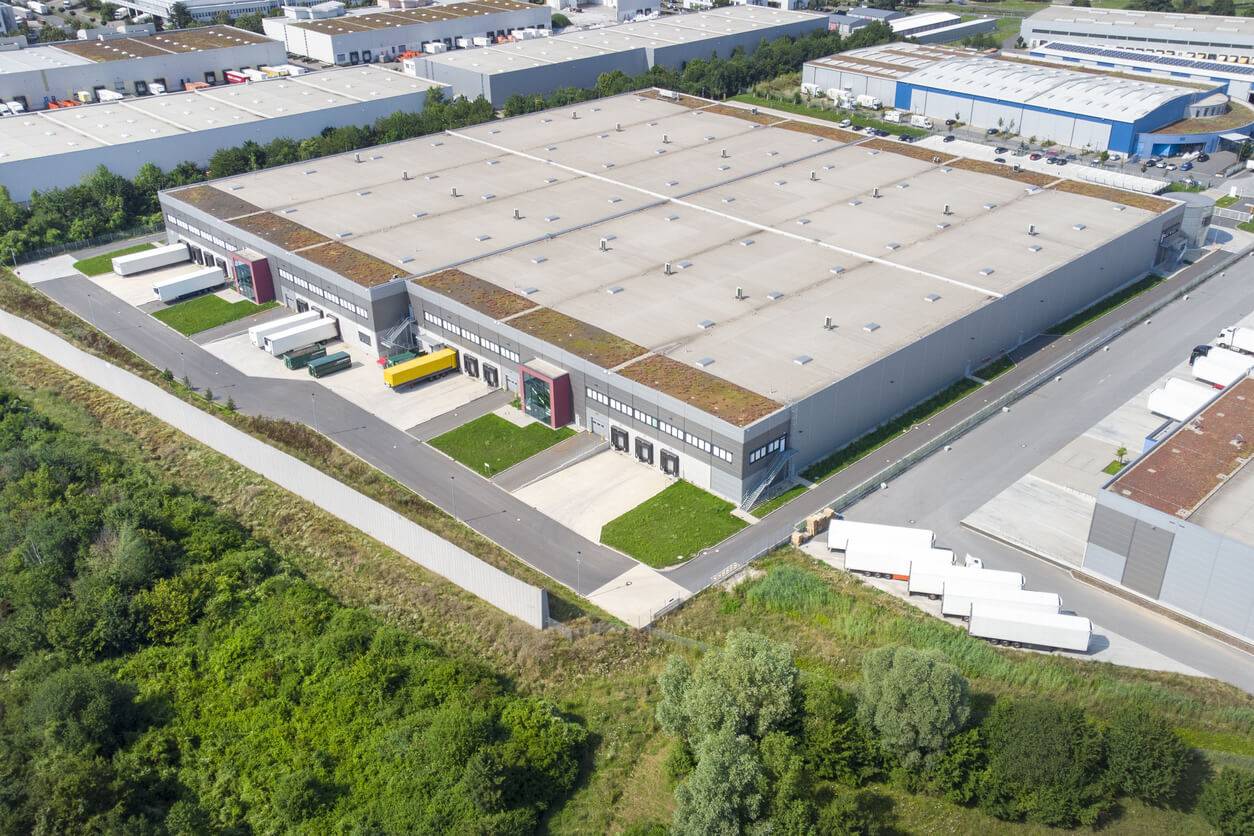
Industrial Roofing for manufacturing facilities, warehouses, and industrial buildings throughout Dayton, OH.
Industrial roofing in Dayton is defined by the presence of Wright-Patterson Air Force Base — the largest single Air Force installation in the United States by area — and the aerospace and defense industrial ecosystem that surrounds it. The Air Force Research Laboratory, defense contractors, and aerospace supplier facilities throughout the Dayton metro create a specific category of industrial building with requirements that go beyond standard commercial roofing practice. We also work across the broader Dayton industrial base: Northwoods Industrial Park, Ascent Industrial Park, Byers Road Industrial Park, and the Moraine industrial corridor represent a diverse cross-section of manufacturing, logistics, and distribution facilities that all require quality industrial roofing. What unifies the Dayton market is Ohio's climate — 41 inches of annual rain, 25 inches of snowfall, and the freeze-thaw cycling of a genuine four-season Midwest environment.
Wright-Patterson Air Force Base presents a category of industrial roofing work that requires specific experience with federal facility project management requirements. WPAFB is an active military installation with classified areas, security protocols, and contractor management systems that govern every aspect of how commercial contractors access and work on the base. The Air Force Civil Engineer Squadron manages facility maintenance contracts, and work on WPAFB buildings requires compliance with base access procedures, security clearance requirements for work in sensitive areas, and quality assurance documentation standards that exceed typical commercial project requirements. Our supervisors who manage WPAFB area work are familiar with the base's contractor management protocols and understand what it takes to execute federal facility industrial roofing work within the requirements the Air Force maintains.
Defense and aerospace contractor facilities in the Dayton metro have their own facility management programs, many of which mirror federal requirements in their security and quality documentation components. Buildings housing classified defense research or sensitive aerospace manufacturing often have access restrictions, camera and device policies, and safety program integration requirements that commercial contractors without DoD supply chain experience aren't prepared to navigate. We've worked on aerospace and defense facility industrial roofing in the Dayton area and have developed the working relationships with facility security and management teams that make these projects execute smoothly.
For Dayton's industrial flat and low-slope roofs, we install TPO, EPDM, modified bitumen, and metal systems matched to building type and condition. EPDM has a strong performance track record in the Dayton area's Midwest climate — its cold-temperature flexibility and thermal cycling tolerance make it well-suited to Ohio winters. TPO with heat-welded seams is increasingly the system of choice on modern industrial construction, particularly for the distribution and logistics buildings in the Northwoods and Ascent industrial parks where energy code compliance and reflective performance are priorities. Modified bitumen in two-ply systems handles legacy manufacturing buildings with complex penetration conditions and irregular substrate surfaces. For new construction industrial buildings and re-roofing over metal framing, standing seam and R-panel metal systems are the standard choice and provide the extended warranty coverage that industrial real estate owners increasingly require.
Snow load and freeze-thaw cycling are the dominant weather considerations for Dayton industrial roofs. Twenty-five inches of average annual snowfall, combined with the freeze-thaw cycling that Ohio's climate delivers through a typical winter — multiple freeze-thaw cycles per week from November through March — creates sustained stress on membrane seams, perimeter flashings, and penetration details. We design all industrial roofing installations in Dayton for Ohio's snow load requirements, ensuring the new system plus design snow load falls within the building's structural capacity. For older industrial buildings where structural documentation is limited, we evaluate framing conditions and recommend structural engineering review when we have concerns about capacity. Freeze-thaw resistance in seam construction and perimeter detail is a baseline specification requirement, not an upgrade option.
The Moraine industrial corridor — along I-75 south of Dayton — has seen significant industrial development over the past decade, adding modern distribution and manufacturing facilities to a corridor that previously housed the former GM assembly plant and automotive industry supply chain. This corridor now hosts a diverse mix of manufacturing, distribution, and logistics operations with varying roofing needs. We work throughout the Moraine corridor on both new construction and re-roofing of older industrial buildings, and we understand the range of building types and conditions across this industrial zone.
Industrial roofing in the Dayton area also encompasses a range of laboratory and research building types associated with the aerospace and defense economy. The Air Force Research Laboratory and the university-affiliated research facilities in the Dayton Innovation District represent buildings with specific technical roofing requirements: complex rooftop equipment fields, specialized exhaust and ventilation penetrations, and interior environments that are sensitive to moisture intrusion at a level that industrial production or warehousing buildings are not. A moisture event in a research laboratory can damage equipment and compromise ongoing research programs in ways that a comparable event in a warehouse would not. We treat research facility roofing with the same care and technical rigor we apply to petrochemical or port-area industrial work.
The Byers Road Industrial Park and Ascent Industrial Park represent the modern industrial development segment of Dayton's roofing market — newer construction, typically steel-framed, with tenants in the manufacturing and distribution sectors. These buildings are generally in good structural condition and their roofing needs are primarily about maintaining systems that are aging toward replacement threshold or upgrading insulation performance to meet current energy code standards. We offer condition assessments and life-cycle planning for industrial parks that help property managers and owners make proactive capital decisions rather than reactive emergency responses.
Maintenance programs for Dayton industrial facilities should be anchored in the fall pre-winter inspection and the spring post-winter assessment. The fall inspection is the most critical: we want every drain clear, every flashing in sound condition, and every known seam concern addressed before Ohio winter begins. The spring inspection documents the effects of the season — freeze-thaw damage at flashings, snow load-related deck deflection, and any membrane conditions that deteriorated through the winter. For active manufacturing and defense contractor facilities, we structure maintenance visits around production and operational schedules to minimize access conflicts.
We work with Wright-Patterson facility engineering, defense contractor facility managers, industrial park property managers, and manufacturing building owners throughout the Dayton metro. Whether you manage an aerospace facility in the WPAFB corridor, a distribution center in Northwoods Industrial Park, a manufacturing building in the Moraine corridor, or a research facility near the university district, we have the technical capability and federal facility experience to serve your industrial roofing needs. Contact us to schedule a site assessment.
Work on WPAFB requires compliance with the base access control and contractor management process managed by the 788th Civil Engineer Squadron. This typically includes background checks and security processing for all workers, vehicle registration for on-base access, daily escort or unescorted access authorization depending on the building's security classification, compliance with base safety programs and hot work permit procedures, and quality documentation requirements that include material submittals, installation records, and close-out documentation. Lead time for the contractor registration and credentialing process can be several weeks, so we initiate that process as early as possible after project award. For work in areas with higher security classification requirements, there are additional requirements we navigate on a project-specific basis. If you're soliciting roofing bids for WPAFB work, asking contractors specifically about their base access credentialing experience is a useful filter for identifying contractors who have actually done this work versus those who are discovering the requirements for the first time.
Freeze-thaw damage on industrial roofs works through two main mechanisms. First, water that has infiltrated minor membrane defects or seam gaps expands when it freezes, progressively enlarging the defect. A small seam gap that leaks a drip during rain may expand to a significant opening after several freeze-thaw cycles, creating a leak that was never addressed from a minor condition. Second, thermal movement from freeze-thaw cycling stresses seam and flashing adhesive bonds, particularly at perimeter and wall terminations where differential movement between the building structure and the roof system is greatest. The prevention strategy is regular fall inspection and repair before the first freeze, heat-welded seam construction on single-ply systems (which outperform adhesive-bonded seams through many freeze-thaw cycles), and proper insulation R-value to reduce thermal gradient across the assembly. For older EPDM systems with adhesive seams that are approaching age, seam reinforcement before winter is a cost-effective preventive measure.
The answer depends on the condition of the existing system, not on a general preference. We evaluate with core samples to determine substrate composition and moisture content, infrared scan to map wet insulation areas, and visual assessment of the deck condition through available access points. If the existing substrate is dry and structurally sound, recovery adds insulation value and can be cost-effective. If we find wet insulation — common in older Dayton industrial buildings that have had maintenance deferred — the wet areas must be removed and replaced regardless of whether the overall strategy is recover or tear-off. Recovering over wet insulation is not an acceptable approach; it traps moisture that will cause progressive deck corrosion and thermal performance degradation. In our experience in the Moraine corridor, older manufacturing buildings more often warrant full or substantial tear-off due to accumulated moisture damage than newer construction, but we make the call based on what the assessment actually finds.
Complex penetration inventories on aerospace and research facilities require systematic documentation and custom flashing design for each penetration type. We begin every project on these buildings with a comprehensive penetration inventory — documenting each stack, curb, conduit, and pipe penetration, its current flashing condition, and the specific detail requirements for the new system. For active process exhaust stacks, we coordinate with facility engineering to understand operating temperatures, exhaust chemistry, and whether any penetrations cannot be disturbed while systems are running. Flashing details for specialized exhaust equipment may require custom fabrication rather than standard catalog components. We've found that the extra time spent on penetration documentation and custom flashing design on aerospace and research buildings is consistently worth the investment — it prevents the problems that arise when standard commercial flashing details are applied to non-standard industrial penetration conditions.
Ohio follows the International Energy Conservation Code, and Climate Zone 5 (where Dayton is located) requires R-30 minimum insulation for new commercial/industrial low-slope roof construction. For re-roofing projects that constitute a major renovation, current code compliance is typically required, meaning existing insulation deficiencies should be addressed as part of the project. We recommend R-30 to R-35 for new construction and significant re-roofing in the Dayton area, with the higher value justified by Ohio's heating-dominated climate where insulation pays back more quickly than in warmer markets. Insulation assembly design — multiple polyiso layers with offset joints — is equally important to achieving the effective R-value in the field rather than just the nominal value on paper. For older industrial buildings with non-standard insulation assemblies, we assess existing R-value through core samples and design the replacement assembly to meet current code while fitting within the structural constraints of the building.
What to send before the roof walk
Send the roof address, leak photos, roof age if known, access instructions, tenant limits, prior reports, and the deadline driving the decision. That lets the first visit focus on the roof condition instead of chasing basic context.
Questions Owners Ask
Can this work happen while the building is occupied?
Often yes. The scope should cover access, safety, dry-in, staging, noise, interior protection, and the times when tenants or operations cannot be interrupted.
What changes the cost most?
Wet insulation, deck condition, edge metal, layer count, access, roof size, code triggers, weather timing, and the amount of repeated damage usually move the cost.
How is the condition documented?
The roof file should include photos, locations, material notes, observed defects, temporary repairs, remaining deficiencies, and recommended next steps.