
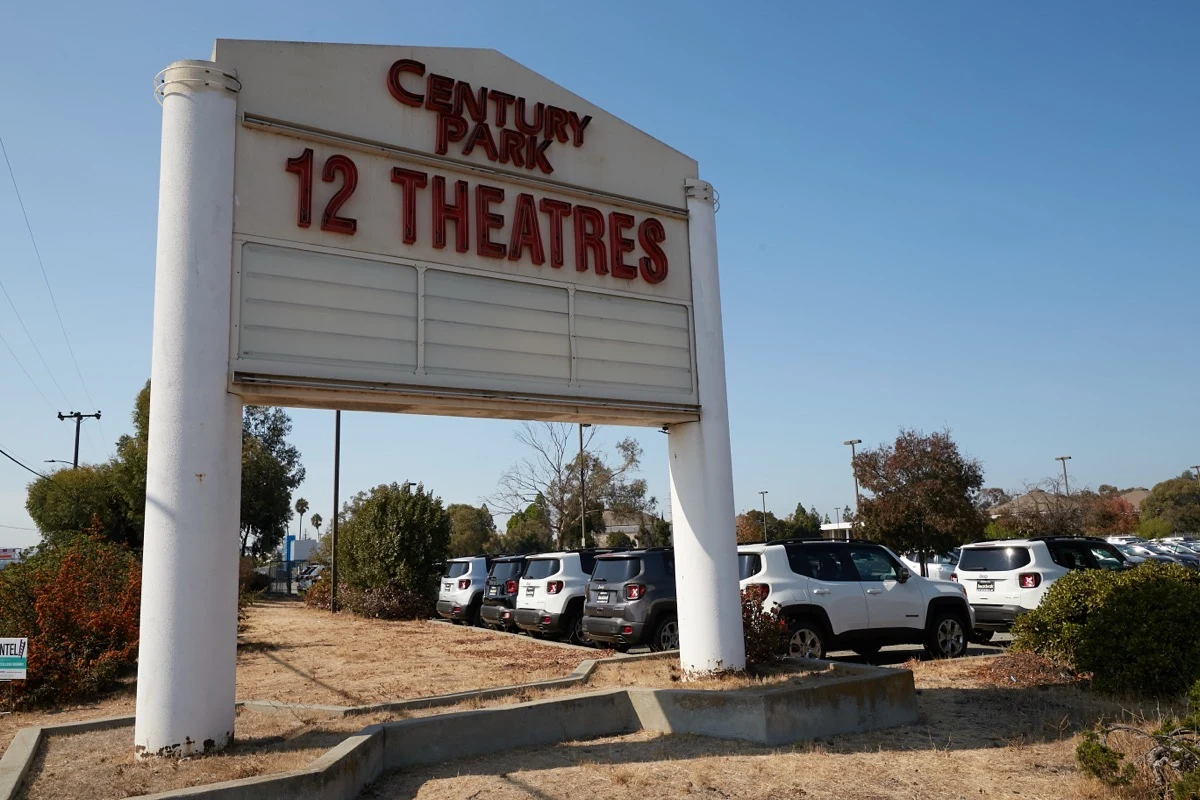
Auditorium spans that cross a hundred feet without a column, a rooftop unit over nearly every screen, and a leak that lands on a digital projector. Theater roofing is its own discipline.
Roofs that span a hundred feet without a column
The defining feature of a cinema is the empty space underneath the roof. An auditorium has to seat hundreds of people with sightlines to a screen and no posts in the way, so the deck above it crosses eighty to a hundred and fifty feet in a single bay. A multiplex stitches eight or twelve of those bays together. Those long spans deflect under wind and snow in ways a stocky retail roof never does, and a fastening pattern lifted from a strip center will work itself loose at the seams over a deck that is constantly moving. We size the attachment and insulation method to the real deck — steel or concrete, its gauge, its rib depth, its span — rather than to a template, because on a cinema the structure dictates the roofing, not the other way around.
Dayton's cinema inventory ranges from the big suburban multiplexes anchoring retail nodes near the Dayton Mall and the Mall at Fairfield Commons in Beavercreek, to dine-in and premium-format houses out toward Austin Landing in Miamisburg, to the historic single-screen and revival houses downtown such as The Neon in the heart of the city. Each format puts a different roof over a different room, and the older downtown houses in particular carry decades of patched-over roofing history that a core sample reveals in a hurry.
A penetration cluster that rivals a hospital
Cinemas pack more rooftop mechanical into a footprint than almost any retail building. Each auditorium typically gets its own rooftop unit so the air handling can be zoned screen by screen, and on top of that sit concession exhaust hoods, lobby make-up air, restroom and projection-booth exhaust, and condensers for the walk-in coolers behind the snack bar. The result is a dense field of curbs and penetrations concentrated over the back of the house, every one of which has to be individually flashed and documented before new membrane goes down over it.
- A dedicated rooftop unit over most screens, each on a curb that must meet warranty height.
- Concession kitchen exhaust carrying grease-laden air that degrades membrane near the discharge.
- Projection-booth cooling loads venting the heat off digital projectors that cannot tolerate a drip.
- Marquee and entry-canopy attachments that penetrate the membrane at the front of the building.
Acoustics live in the roof assembly
A theater roof does more than keep rain out — it keeps the thunderstorm in screen six from bleeding into the quiet dialogue in screen seven, and it keeps an actual rainstorm from being audible over the soundtrack. That acoustic role shapes the assembly. The insulation depth, the deck type, and how penetrations are isolated all affect sound transmission between auditoriums and from the weather outside. When we recover or replace a cinema roof we keep the acoustic performance intact, because a watertight roof that suddenly lets the audience hear hail on metal deck is a complaint generator even if it never leaks.
For most Dayton multiplex roofs we specify a 60-mil or 80-mil TPO mechanically attached over tapered polyiso. The tapered insulation corrects the flat-roof ponding that builds up over decades on these big horizontal decks, and a reflective white membrane meets the cool-roof requirement most jurisdictions now apply to commercial reroof permits. Around the dense equipment field at the back we add reinforced walkway pads so the steady traffic from HVAC service crews never wears through the sheet. On concrete decks, or on long spans where deflection makes seam-concentrated fasteners a liability, we move to an adhered or hybrid assembly. Every recommendation follows a core sample that confirms the existing layers, moisture content, and total weight in place.
Working around the show, not against it
A cinema runs matinee through last call, seven days a week, which leaves a narrow daytime window and a hard stop every evening. We sequence tear-off and dry-in so each section is watertight before the first evening showtime, coordinate any rooftop-unit shutdown with facilities so an auditorium is never sold while its air handling is down, and route crew access and material staging clear of the front entries and the loading dock the concession deliveries use. The plan is written before mobilization and the manager gets a daily watertight confirmation.
The marquee and canopy are the chronic leak
The spot that leaks on an older theater is almost never the open field — it is the entry canopy and the marquee, where supports and conduit punch through the membrane and the canopy roof ties into the building wall. Those transitions take thermal cycling and differential movement that standard retail flashing was never built to survive. We treat each one as its own flashing item and re-detail it as part of the project rather than chasing the drip back to it later.
Big flat decks and the Ohio freeze-thaw
The huge horizontal decks over auditoriums are exactly the surface ponding water loves. Without proper slope, every rain leaves standing water that sits over the membrane, and through a Miami Valley winter that water freezes, expands in seams and at flashings, then thaws and refreezes night after night. Over a few seasons that cycle is what opens a watertight roof. It is why we lead with tapered insulation on cinema reroofs — not as an upsell, but because building positive drainage into a flat hundred-foot bay is the single most effective thing we can do to keep a theater roof from failing where the deck is widest and the water collects deepest.
Finding the leak before it reaches the projector
Tracing a leak across a long-span cinema deck is its own challenge, because water that enters at a curb over the lobby can run down the deck flutes and surface above an auditorium fifty feet away. We do not guess. We isolate roof zones, inspect the dense back-of-house penetration field curb by curb, and use moisture surveys to find saturated insulation that has not yet shown itself inside. On equipment a theater cannot afford to lose — the digital projectors, the server room, the sound racks — finding the true entry point matters far more than patching the nearest stain, and that is where the methodical approach pays for itself.
Keeping a cinema roof out of crisis
The cheapest theater roofing project is the one that never becomes an emergency. A multiplex roof carries so many curbs, drains, and grease-laden exhaust discharges that small failures are constant and easy to stay ahead of with a routine. Twice-yearly inspections that clear the drains, reseal aging pipe boots, check the canopy transition, and document the membrane near concession exhaust will add years to the system and let an owner budget replacement on their schedule rather than during a downpour over a sold-out Friday night.
If you operate a theater in the Miami Valley and the roof is overdue, or a projector room has started showing stains, request a roof review and we will scope it to the building you actually run.
What to send before the roof walk
Send the roof address, leak photos, roof age if known, access instructions, tenant limits, prior reports, and the deadline driving the decision. That lets the first visit focus on the roof condition instead of chasing basic context.
Questions Owners Ask
Can this work happen while the building is occupied?
Often yes. The scope should cover access, safety, dry-in, staging, noise, interior protection, and the times when tenants or operations cannot be interrupted.
What changes the cost most?
Wet insulation, deck condition, edge metal, layer count, access, roof size, code triggers, weather timing, and the amount of repeated damage usually move the cost.
How is the condition documented?
The roof file should include photos, locations, material notes, observed defects, temporary repairs, remaining deficiencies, and recommended next steps.