
Why a Car Wash Roof Fails From the Inside Out
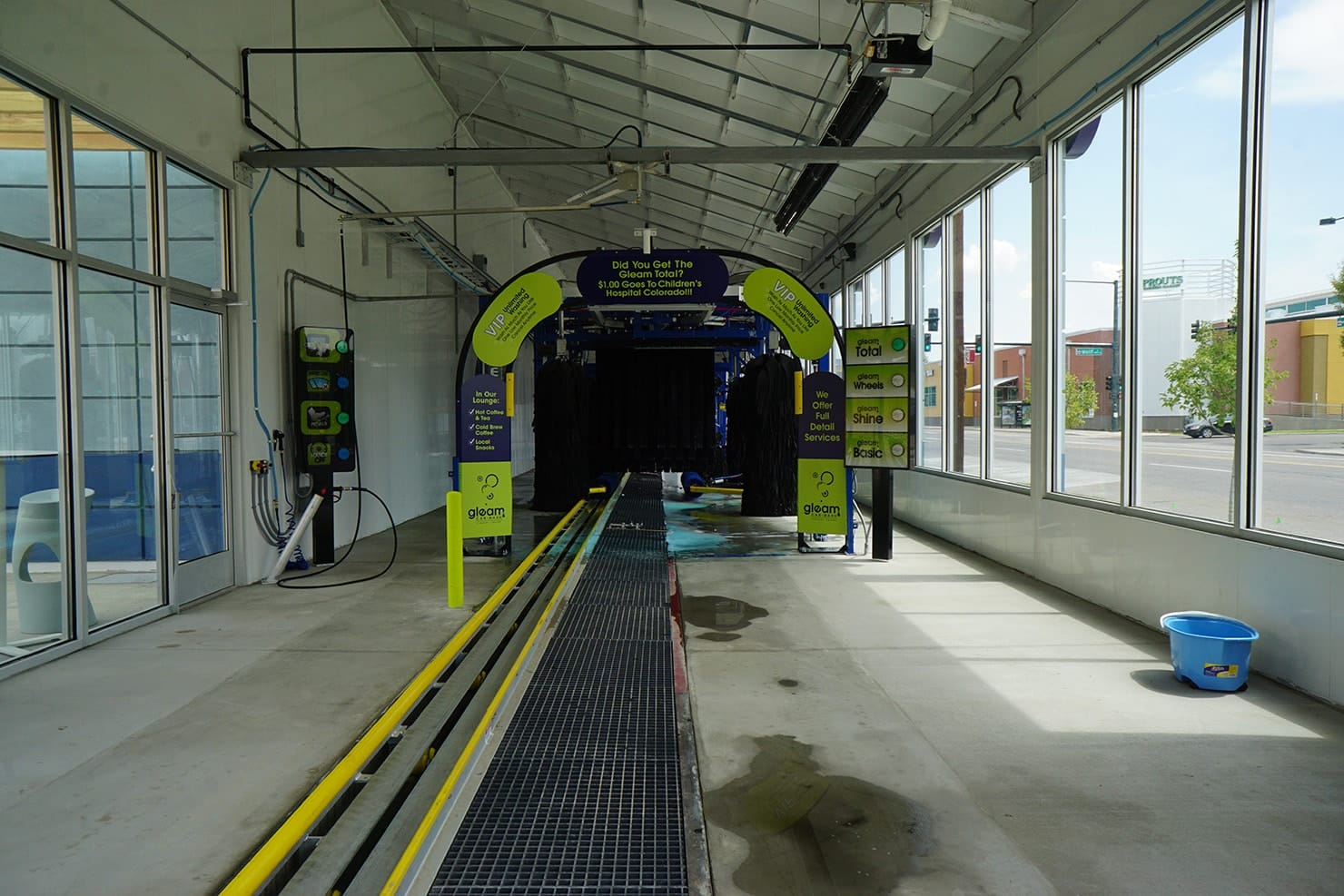
A car wash is one of the few buildings we work on where the roof is usually attacked from below before anything goes wrong on top. Inside an active tunnel, hot water, foaming detergents, tire dressings, and drying agents turn to a warm chemical fog that rises straight into the deck, the underside of the insulation, and every fastener head holding the assembly down. We have pulled membrane off Dayton tunnel washes that looked fine from the parking lot and found steel deck flaking with rust and screws that backed out because the corrosion had eaten the bite out of them. That is the reality we plan around on every car wash we touch, from the express tunnels along Wilmington Pike and Brown Street to the in-bay and self-serve sites scattered through Kettering, Huber Heights, and the Miamisburg-Centerville corridor.
Dayton has a dense, competitive wash market. New express conveyor sites keep going up along the high-traffic retail stretches near the Dayton Mall and the Austin Landing area off I-75, while older full-service and self-serve operations hold ground in Northridge, West Carrollton, and the neighborhoods feeding Wright-Patterson. The wash chemistry has gotten more aggressive across all of them — ceramic sealants and high-alkaline presoaks are far harder on a roof than the soap formulas of fifteen years ago. A roof spec that ignores that chemistry is a roof that will not reach its warranty term.
The Tunnel Is the Hardest Roof Zone We Handle
The stretch of roof directly over the wash tunnel takes punishment that no office or retail roof ever sees. You have constant interior humidity, thermal shock from hot-water cycles slamming against cold outside air, and a vapor stream loaded with surfactants and salts. That combination breaks down the wrong membrane chemistry fast and corrodes anything metal it can reach. For this reason we lean heavily toward PVC over the tunnel. PVC holds up to the alkaline detergents and oily residues that make TPO and EPDM brittle or cause seams to lose their grip over a wash environment. We typically detail it fully adhered or fleece-backed so there is no fastener field sitting in that corrosive air and no membrane flutter from the tunnel's own air movement.
Below the membrane, we treat the deck and the vapor side of the assembly as part of the scope, not an afterthought. If the existing steel deck is already rusting, a recover that traps that moisture is throwing money away. We core the assembly, check for wet insulation and deck loss, and where the deck is compromised we address it before a single roll of membrane goes down. Getting the vapor drive right for a humid, refrigerated-air interior pushing against Ohio's freeze-thaw winters is what keeps condensation from forming inside the system and rotting it out invisibly.
Equipment Rooms, Lobbies, and the Quieter Roof Areas
Most washes are not a single roof. The equipment and pump room, the customer lobby on full-service sites, the office, and the mechanical mezzanine each sit under their own roof section with very different exposure. The equipment room runs warm and damp from pumps and reclaim tanks but does not see the full chemical fog of the tunnel. The lobby and office are ordinary conditioned space. We do not over-spec the calm areas to tunnel standard or under-spec them by treating the whole building as one roof — we match the system to each zone so you are not paying for PVC where mechanically attached TPO does the job fine.
Penetrations, Exhaust, and Drainage
Car wash roofs are crowded with penetrations, and each one is a leak waiting to happen if it is flashed like a standard rooftop curb. High-volume exhaust fans pull steam and chemical vapor up and out of the tunnel, and those openings need oversized, properly detailed curbs that account for continuous wet airflow rather than the dry exhaust a normal building puts out. Reclaim-tank vents, blower stacks, and electrical runs to the dryers all break the membrane plane and all get evaluated individually.
Drainage is the other recurring problem we find on Dayton washes, especially in-bay and self-serve buildings. Flat bay roofs that were never properly sloped pond water over the equipment area, and standing water plus winter freeze-thaw is a fast track to membrane failure right above your most expensive machinery. Where we find chronic ponding, tapered insulation to redirect flow to scuppers or drains is part of the fix, not an upsell we tack on later.
Vacuum Canopies and Customer Canopies
Dayton express sites live and die on their vacuum islands, and the canopies over them are their own roofing problem. They sit out in the weather catching vehicle exhaust, tire-shine overspray, and the full swing of Ohio temperatures, and the spot where the canopy ties back into the main building is the single most common leak we trace on express washes. Canopy membrane or metal panel work, the gutters and downspouts, and that canopy-to-building transition flashing are all inside the scope we quote rather than a surprise later.
Washes in this market run seven days a week through most of the year, and a closed tunnel is lost revenue you can put a number on. We sequence the work to fit that. Tunnel roof work gets concentrated in early-morning or after-close windows so the conveyor keeps running during peak hours. Exterior building, equipment-room, and canopy work can usually proceed during operating hours with the crew staged clear of the vehicle path and the vacuum islands. Every day ends watertight before you reopen.
- PVC membrane specification matched to your actual wash chemistry, not a generic single-ply
- Deck and vapor-side inspection to catch corrosion before it spreads under a recover
- Oversized, purpose-built flashing for tunnel exhaust and reclaim vents
- Drainage correction with tapered insulation where bay roofs pond
- Full canopy scope: membrane or panel, gutters, and the building-transition flashing
- Phased scheduling that keeps the tunnel earning during business hours
Whether you run a single express tunnel near the Dayton Mall or a portfolio of self-serve and in-bay sites across Montgomery County, we will walk the roof, core where it matters, and give you a scope based on how a car wash actually beats up a roof. Reach out and we will get a roof review on the calendar.
What to send before the roof walk
Send the roof address, leak photos, roof age if known, access instructions, tenant limits, prior reports, and the deadline driving the decision. That lets the first visit focus on the roof condition instead of chasing basic context.
Questions Owners Ask
Can this work happen while the building is occupied?
Often yes. The scope should cover access, safety, dry-in, staging, noise, interior protection, and the times when tenants or operations cannot be interrupted.
What changes the cost most?
Wet insulation, deck condition, edge metal, layer count, access, roof size, code triggers, weather timing, and the amount of repeated damage usually move the cost.
How is the condition documented?
The roof file should include photos, locations, material notes, observed defects, temporary repairs, remaining deficiencies, and recommended next steps.