
Commercial Real Estate and REIT Roofing for commercial buildings across Dayton, Montgomery County, Kettering, Beavercreek, Fairborn, Huber Heights, Vandalia, Miamisburg, Centerville, Springboro, Troy, Xenia, and the Miami Valley.
Dayton, Ohio occupies a distinctive position in the Midwest data center landscape, shaped by the city's role as home to Wright-Patterson Air Force Base — one of the largest Air Force installations in the country and a major center of defense research, aerospace systems, and military logistics technology. The concentration of defense technology contractors in the Dayton area, including major operations from Booz Allen Hamilton, SAIC, and Leidos supporting WPAFB programs, creates demand for secure computing infrastructure that is distinct from purely commercial data center markets. Wright-Patterson's Air Force Materiel Command mission drives classified and sensitive-but-unclassified computing infrastructure requirements that support the Dayton technology corridor's specialized facilities sector.
Data center roofing at Dayton's defense-adjacent facilities requires a level of security awareness and access control compliance that exceeds standard commercial project requirements. Facilities supporting WPAFB contractors or hosting government workloads under GSA Schedules and DoD contracts may require that roofing contractor personnel hold current background investigations, that all work be conducted under facilities security officer observation, and that any materials removed from the facility be documented and disposed of according to controlled waste protocols. Contractors pursuing data center roofing work in Dayton's defense-adjacent market must build these requirements into their bid pricing and project scheduling from the outset.
Beyond the defense sector, Dayton's data center market includes commercial colocation facilities serving the healthcare, manufacturing, and logistics sectors that form the backbone of the Southwest Ohio economy. Premier Health, Kettering Health Network, and other regional healthcare systems maintain data center infrastructure in the Dayton metro that processes clinical and administrative data subject to HIPAA requirements. Manufacturing companies supplying the automotive and aerospace supply chains in the region — including major operations supporting Honda of America in nearby Marysville — require reliable computing infrastructure that has driven demand for enterprise colocation services in the Dayton market.
Dayton's climate presents the full range of Midwest weather challenges for data center roofing system performance. Average annual snowfall of 27 inches, combined with frequent freeze-thaw cycling through the winter and spring months, creates the penetration flashing fatigue conditions common across Ohio. The Miami Valley region experiences significant tornado activity — Dayton is located in a portion of Ohio with documented tornado exposure, and the 2019 Memorial Day tornado outbreak that struck the Dayton metropolitan area directly was a stark demonstration of the severe wind vulnerability that data center facilities must be engineered to withstand. Post-tornado inspection of data center roofing systems in affected areas identified edge metal separation and membrane uplift as the primary failure modes that occurred even in facilities that were not in the direct path of tornado-force winds.
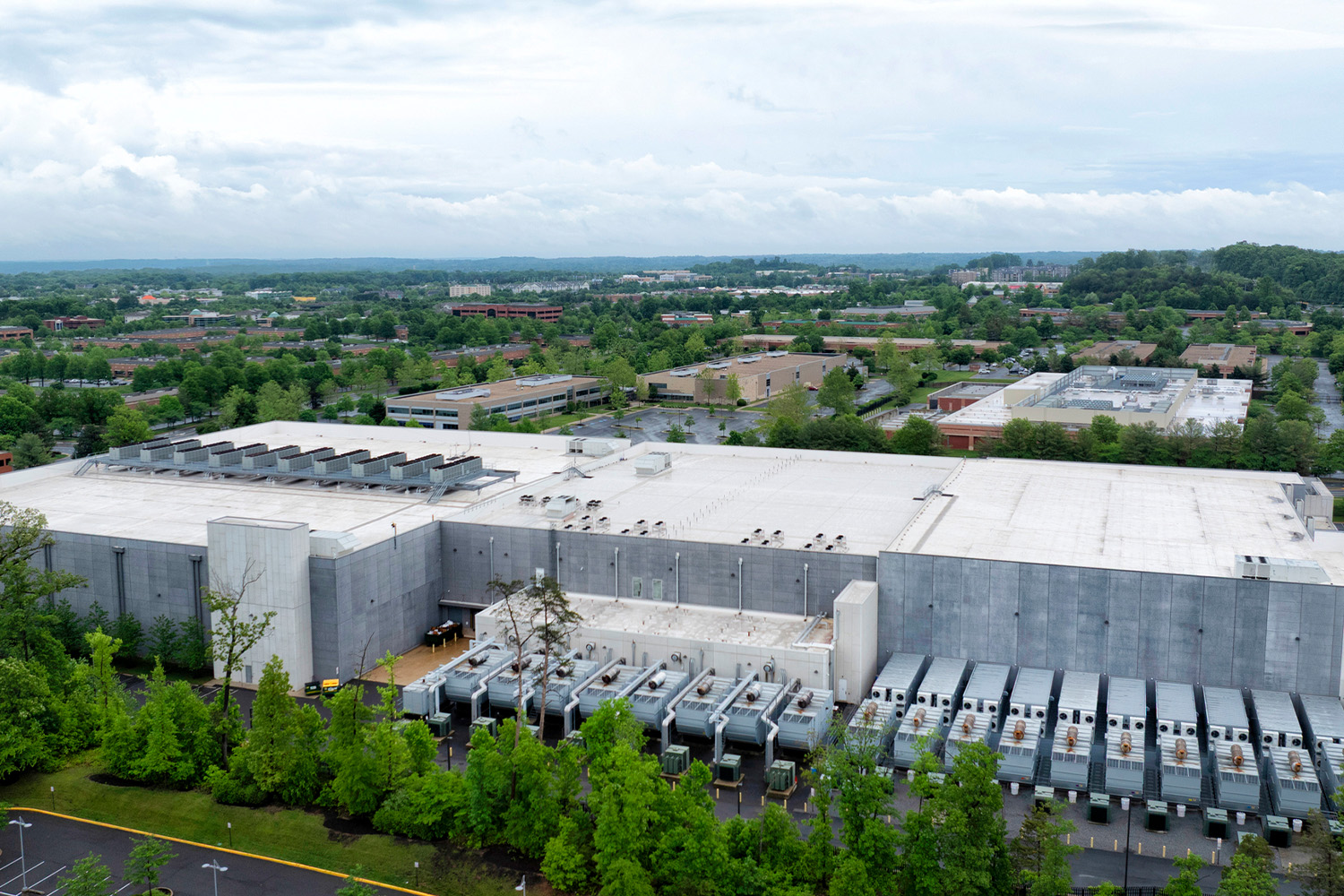
CRAC and CRAH unit penetrations at Dayton data centers must be engineered for the Ohio Valley freeze-thaw cycle while maintaining the airtight performance that prevents cold outdoor air from infiltrating the facility through mechanical penetrations during winter. Air infiltration through CRAC unit base penetrations can create condensation within the insulation assembly if the indoor data hall air — which is typically maintained at controlled temperature and humidity for equipment reliability — encounters the cold outdoor air trapped in an inadequately sealed penetration. The resulting moisture accumulation degrades insulation performance, adds structural load over time, and can eventually reach the membrane underside in cases of severe, long-term infiltration.
Generator installations at Dayton data centers are sized with Ohio Valley utility reliability and tornado vulnerability in mind. Facilities supporting healthcare or government workloads typically maintain generator capacity to sustain full IT and cooling load for 72 hours or more, requiring substantial rooftop exhaust infrastructure when generator sets are sited adjacent to the building. The 2019 tornado event reinforced the importance of generator fuel supply reliability and highlighted the need for rooftop fuel vent and fill penetration details that maintain weather protection even when the surrounding area experiences extended severe weather conditions.
Wright-Patterson Air Force Base's research and development mission has contributed to a culture of technological innovation in the Dayton metro that extends to building systems and roofing technology adoption. Several Dayton data center operators have been early adopters of advanced roof monitoring systems — including moisture sensors embedded in insulation assemblies and continuous slope-monitoring systems that detect drainage impairment caused by structural settlement or debris accumulation. These technologies, while not yet standard across the broader commercial market, provide data center operators with real-time roofing condition data that reduces the risk of undetected damage progressing to membrane failure.
TPO membrane systems are the prevailing specification for new data center construction in Dayton, reflecting both the material's proven performance in Ohio's climate and the regional roofing contractor community's familiarity with TPO installation to mission-critical standards. Tapered polyisocyanurate insulation assemblies maintaining positive slope to interior roof drains are the preferred configuration, ensuring that Dayton's combined snow, ice, and rain precipitation has a clear path to drainage systems without creating the ponding conditions that accelerate membrane fatigue on flat assemblies. NDL manufacturer warranties for 20-year terms are standard on Dayton data center projects, with warranty qualification inspection a required step in the quality assurance program.
Frequently Asked Questions: Data Center Roofing in Dayton, OH
How does proximity to Wright-Patterson Air Force Base affect data center roofing contractor requirements?
Facilities supporting WPAFB programs or hosting defense-related tenants may require roofing contractor personnel to hold current background investigations, comply with facility security plans approved by the installation security officer, and document all work activities and material disposals according to controlled site protocols. Contractors should clarify security requirements during the bid phase and factor personnel investigation lead times into their project schedule commitments.
What were the key roofing lessons from the 2019 Dayton tornado outbreak for data center facilities?
The 2019 event revealed that edge metal separation and perimeter membrane uplift can occur even at facilities not in the direct tornado path, as the high-wind field surrounding touchdown events extends well beyond the damage corridor. Dayton data center facilities increased the frequency of edge metal and perimeter flashing inspection after 2019, and several facilities upgraded to FM Global-rated edge systems with enhanced wind uplift performance. Annual pre-severe-weather-season inspections are now standard at most Dayton data center facilities.
How should Dayton data centers address CRAC unit air infiltration through roof penetrations?
CRAC unit base penetrations should be sealed with closed-cell spray foam or elastomeric sealants that prevent air infiltration from the exterior into the insulation assembly. Vapor retarder continuity at all penetrations is essential to prevent moisture-laden indoor air from entering cold sections of the insulation during winter. Post-installation air barrier testing of CRAC penetrations is a quality assurance step that identifies infiltration pathways before they contribute to insulation degradation.
What documentation standards apply to data center roofing projects in Dayton's healthcare sector?
Healthcare data center projects in Dayton — including facilities supporting Premier Health, Kettering Health Network, and physician practice management systems — typically require material safety data sheets, installer qualifications documentation, post-installation inspection reports, and warranty documents in formats compatible with Joint Commission physical plant documentation requirements. Roofing contractors should confirm documentation requirements during the pre-bid phase rather than attempting to reconstruct documentation after project completion.
How are embedded roof moisture monitoring systems installed without compromising waterproofing integrity?
Moisture sensors and slope monitoring devices require penetrations for communication cabling and, in some cases, for structural attachment anchors. These penetrations must be treated with the same flashing discipline as any other roof penetration — properly sleeved, counter-flashed, and sealed with appropriate sealants. Sensor cable runs across the roof surface should be protected in conduit to prevent UV degradation of cable insulation and mechanical damage from maintenance traffic.
What to send before the roof walk
Send the roof address, leak photos, roof age if known, access instructions, tenant limits, prior reports, and the deadline driving the decision. That lets the first visit focus on the roof condition instead of chasing basic context.
Questions Owners Ask
Can this work happen while the building is occupied?
Often yes. The scope should cover access, safety, dry-in, staging, noise, interior protection, and the times when tenants or operations cannot be interrupted.
What changes the cost most?
Wet insulation, deck condition, edge metal, layer count, access, roof size, code triggers, weather timing, and the amount of repeated damage usually move the cost.
How is the condition documented?
The roof file should include photos, locations, material notes, observed defects, temporary repairs, remaining deficiencies, and recommended next steps.